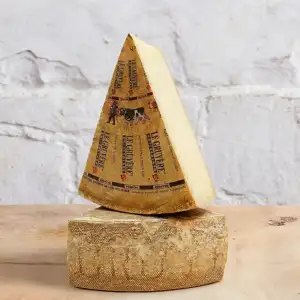
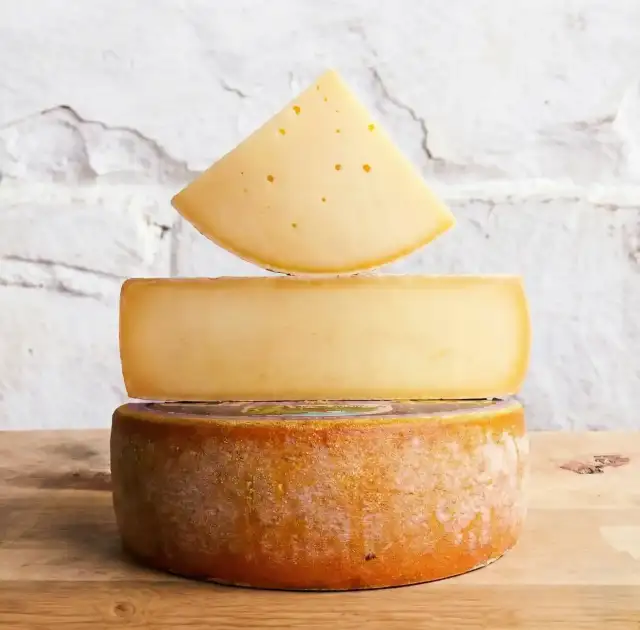
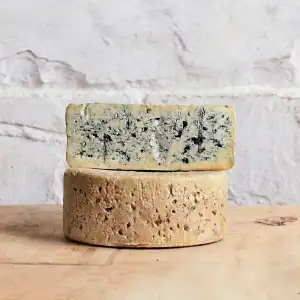
Schnebelhorn 180g
About This Cheese
Sweet, nutty, and savoury, with undertones of roast onion. Schnebelhorn is a rich and robust cheese. It has a great bite with the occasional crystalline bit here and there. An excellent addition to a cheeseboard.
TypeHard
Rennettraditional
RegionToggenburg, Switzerland
ProducerReto Güntensperger
Milkraw cow
Rindwashed
€7.50
Story
Schnebelhorn is a wonderful Swiss cheese made with milk from Braunvieh cows grazing on high altitude pastures. Named after the region’s highest mountain peak, Schnebelhorn stands out for its complex textural and flavour characteristics. During the cheesemaking process, the milk is enhanced by the addition of cream left over from the Appenzeller production from the same dairy. Aged 8-9 months, the cheese develops a pronounced level of distinct alpine cheese brothy flavour. This is balanced by tremendous richness and a lightly piquant kick at the finish. This is a favourite of Sheridans customers.
Producer
Cheesemaker Reto Güntensperger grew up in the historic Bodmen dairy, his bed mere steps from the room where his father & grandfather crafted Appenzeller by hand in their 1,500 litre vat. By 1999, his father and two brothers moved operations into the village of Butschwil below, purchasing the fallow dairy and rebuilding it, expanding their family business as their own children grew into the company. The dairy is now a model of balance between modern efficiency and time-honoured tradition. Reto only uses milk from the herds grazing on the high altitudes for this cheese
It is a cream added cheese, it is richer and more decadent than most of the cheeses from this cheese-rich region.
Goes Well With
FAQs
Cheese should be unpacked and stored in a cool place, ideally around 5 degrees. Take out about an hour before serving, and allow to come to room temperature. Leaving cheese come up to room temperature (“to chambre”) allows it to develop a fuller, more aromatic flavour. Beware temperatures that are too warm (hot kitchen) and try and let the cheese come up to temperature in a relatively cool place like a cool pantry. Harder cheeses can need a little more time than softer ones.
Cheeses like cheddars that have more open texture pastes where the curd is not heavily compacted during the cheesemaking process can have occasional blue veining. Though this blueing is caused by unintentional rouge pencillium genus mould that has found its way into the cheese, it is often sought after for its contributing flavour.
Frequently, cheeses that start to grow mould while aging, in storage, or during transit can be salvaged and are safe to consume. In the case of blue/white mould that has begun to form, it can be scraped off with regular dinner knife or back of chef knife, and bloomy rind cheeses often begin to re-rind themselves on the cut surface which can just be cut off or eaten.
Spoiled cheese has some key indicators – if you get an ammonia/sour smell or taste then it goes in the bin.
Fresh, high moisture, young cheeses (think mozzarella/ricotta/mascarpone/cream cheese) that have mould growing should be discarded immediately.
Moulds that show up with black or reddish hue should be discarded.
Our primary aim is to provide delicious, quality, safe cheeses to our Sheridans customers however cheese is a living thing with an agenda of its own. If you believe your cheese (or other food item) has spoiled, please contact us immediate at online@sheridanscheesemongers.com for a replacement or refund.
Nutritional Information
Ingredients: raw cow’s (milk): 98%; salt: 1.90%;
starter cultures: 0.09%; rennet: 0.01%
Allergens listed in BOLD
Nutritional values per 100g
Energy: 1820kJ/ 435kCal
fat 38.2g
thereof saturated 22.8g
carbohydrate 0.4g
thereof sugar 0.4 g
protein 23.5g
salt 1.9g
Seasonal Best Sellers
-
Sheridans Basil Pesto 180g€6.60 -
Brie De Meaux 180g€7.20 -
Bleu D'Auvergne€6.60 – €19.80Price range: €6.60 through €19.80


Odysea Roasted Red Peppers 350g
Brie De Meaux 180g
Guilhem Rouge Moulin de Gassac
St Killians 150g
Sheridans Basil Pesto 180g